
By Jake Vippond, Lotus Recycling
The federal government's national solar panel recycling pilot has stalled. I have worked at Lotus Recycling since it started, and my reaction is mixed. Here is where the scheme stands, why the delay worries me, why the scheme as designed worried me more, and what you can do with old panels in the meantime.
Where the scheme stands
In January 2026 the government announced the $24.7 million National Solar Panel Recycling Pilot. It was meant to set up as many as 100 collection sites around the country and collect and recycle up to 250,000 panels over 12 to 18 months, to test how a full national stewardship scheme would work.
In March the government went to tender for a partner to run the pilot. That process was suspended after a complaint about how the procurement was set up, and in November 2026 the environment department confirmed it had cancelled the procurement without awarding a contract. The department says it is now considering next steps. Environment Minister Murray Watt says the government remains committed to a national pilot and has asked the department for urgent advice, but no new timeline has been given.
So the scheme has not been scrapped, but nothing is operating and there is no date. You can read the reporting at RenewEconomy and AAP.
The bitter part: the panels are not waiting
A few years back we would be taking in about 250 panels a week, most of them rated between 190 and 250 watts. We now see that many in a day, and they are bigger, in the range of 250 to 400 watts. Household battery rebates have pushed a lot of people to upgrade their whole system. As a result, a lot of solar panels are being recycled prematurely.
To put that in perspective, the entire national pilot was planned to handle up to 250,000 panels over 12 to 18 months. At around 250 panels a working day, our one plant in Campbellfield is already handling a large share of that volume on its own, with no pilot funding behind it.
I expect the numbers to keep climbing. Electric vehicles and data centres are driving demand for more generation, which means more panels going up now and more, larger panels to recycle later. Every month without a scheme, the cost and the responsibility sit with whoever happens to own the panel at the end of its life.

The sweet part: the scheme had a hole in it
My concern with the scheme as proposed was that there were going to be no standards for how a panel had to be recycled, or what percentage of it had to be recovered.
That leaves the floodgates open. Someone could set up a business, claim to recycle, show no data, get paid by the taxpayer for every panel they take, and leave those panels sitting in a backyard. That outcome would be worse than no scheme, because the public would have paid for recycling that never happened.
What a scheme should require
- A minimum recovery rate, for every panel.
- Weighted difficulty factor for the recovery of solar cells.
- Proof of where the recovered materials go.
- Audits of the recycling sites and the entire process.
- Limits on how long panels can be stockpiled before they are processed.
- Large penalties for committing fraud under the scheme.
If the pause of the deployment of the scheme is used to add the points above, it will have been worth it.
What real recycling looks like
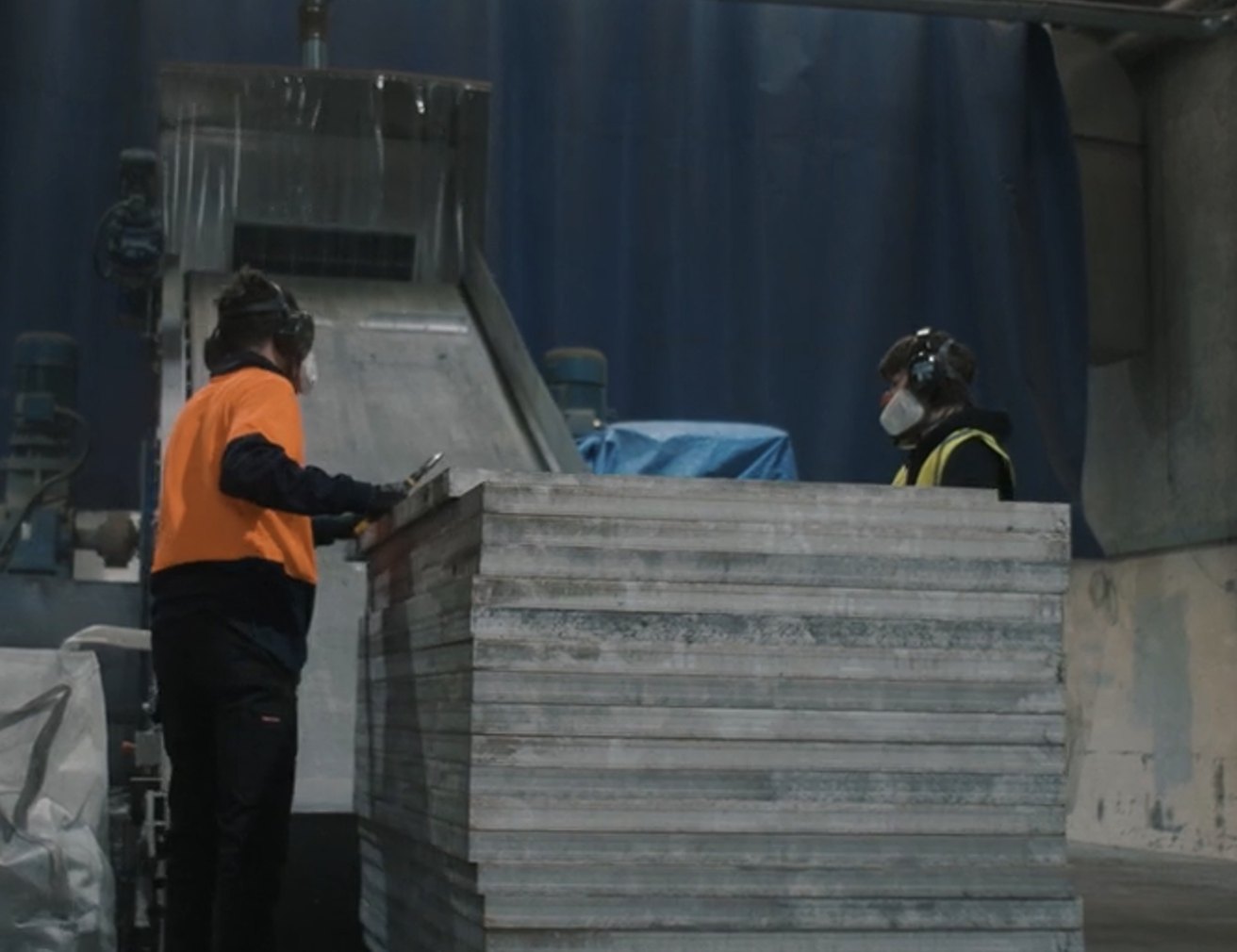
Recycling a panel means taking it apart and sending the materials back to industry. At our Campbellfield plant the aluminium frame and the glass are separated mechanically, and the silicon and silver are then recovered from the cells without acids. What comes out is listed on our recovered materials page. A scheme should pay for that outcome, measured by weight, and nothing less.
What to do with old panels now
You do not need to wait for a scheme. In Victoria, solar panels are e-waste and have been banned from landfill since July 2019, and they can be recycled today. Homeowners can ask their installer where the old panels go, or use one of our drop-off bins. Installers can set up a regular collection or drop-off through commercial recycling. Solar farm owners should plan recycling into decommissioning from the start.
Whoever you use, ask them two questions: what percentage of the panel do you recover, and where does it go?
Call 1300 0 LOTUS or contact our team.
About the author
Jake Vippond has worked at Lotus Recycling since its inception and is currently studying electrical engineering. He has worked across the whole solar panel life cycle:installation, decommissioning and recycling.