
Materials recovered from end-of-life solar panels
Lotus Recycling recovers silicon, metals and glass from end-of-life solar panels at our Campbellfield, Victoria facility and supplies them back to Australian industry. Pricing follows current commodity markets and depends on volume, so every material is quoted on request.
What we make from recovered panels
Four product lines, each made from material that used to be a solar panel.

Silicon anode blend
Porous nano silicon recovered from solar cells, for blending with graphite in lithium-ion battery anodes.
Request a quoteAbrasive blasting media
Crushed and graded solar glass for sand blasting: stripping coatings, rust and scale before repainting.
Request a quoteCement replacement
Finely ground solar glass that stands in for part of the cement in concrete, lowering its embodied carbon.
Request a quote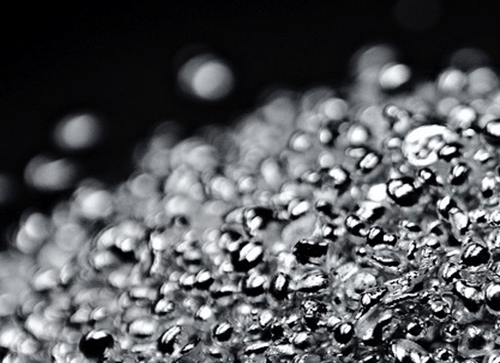
Recovered metals
Silver, tin copper and aluminium separated from panels and ready to go back into manufacturing.
Request a quotePorous nano silicon
The silicon in a solar cell is too valuable to bury. We recover it and refine it into porous nano silicon powder for the next generation of lithium-ion batteries.
Why silicon in battery anodes
Most lithium-ion batteries use graphite anodes. Adding silicon lets the same battery hold more energy, which is why cell makers are moving to silicon-graphite blends.
Request a quoteSilicon can store around ten times more lithium by weight than graphite.
Silicon swells as it charges. A porous nano structure gives it space to expand, which helps the anode last.
Suited to silicon-graphite and silicon-carbon composite anode development.
Recovered from end-of-life solar cells in Victoria instead of newly refined silicon.
Silver, tin copper and aluminium
The metals in every panel, separated and ready to go back into manufacturing.
Silver
Silver recovered from solar cell metallisation, for conductive pastes, PV re-metallisation and refining.
Request a quoteTin copper
Tin-coated copper recovered from solar panel interconnect ribbon, for remelting and refining.
Request a quoteAluminium granules
Granulated aluminium recovered from solar panel frames, for remelting, casting and secondary aluminium production.
Request a quoteGlass that replaces cement, not just sand
Glass is the largest part of every solar panel by weight. Rather than using it as a sand substitute, we process it for two higher-value jobs: replacing part of the cement in concrete, and abrasive blasting.
Glass powder for cement replacement
Finely ground glass is a pozzolan: it reacts with cement as concrete cures, so it can stand in for part of the cement itself. Cement is the most carbon-intensive ingredient in concrete, so replacing it does more for embodied carbon than swapping out sand.
Request a quoteGlass grit for abrasive blasting
Crushed solar glass graded for blasting: removing coatings, rust and scale before repainting. Glass is amorphous rather than crystalline silica, which is why crushed glass is widely used in place of sand for blasting.
Request a quoteHow ordering works
Tell us the material and quantity you need.
We reply with current pricing, availability and specifications.
Collect from our Campbellfield facility or ask us about freight.
Need a different grade or a regular supply?
Call 1300 0 LOTUS or send us your requirements and we will come back with options.
Contact our team